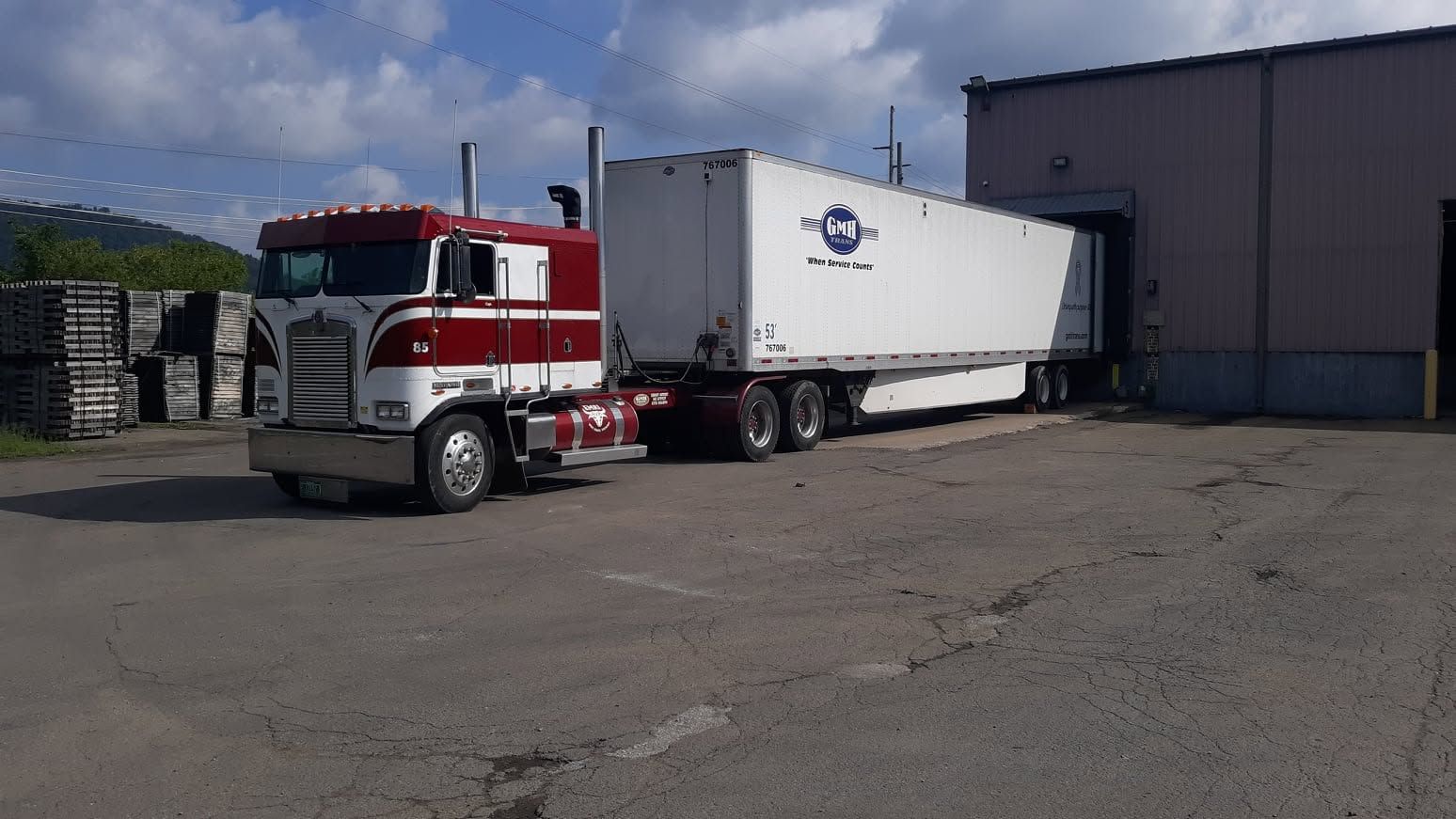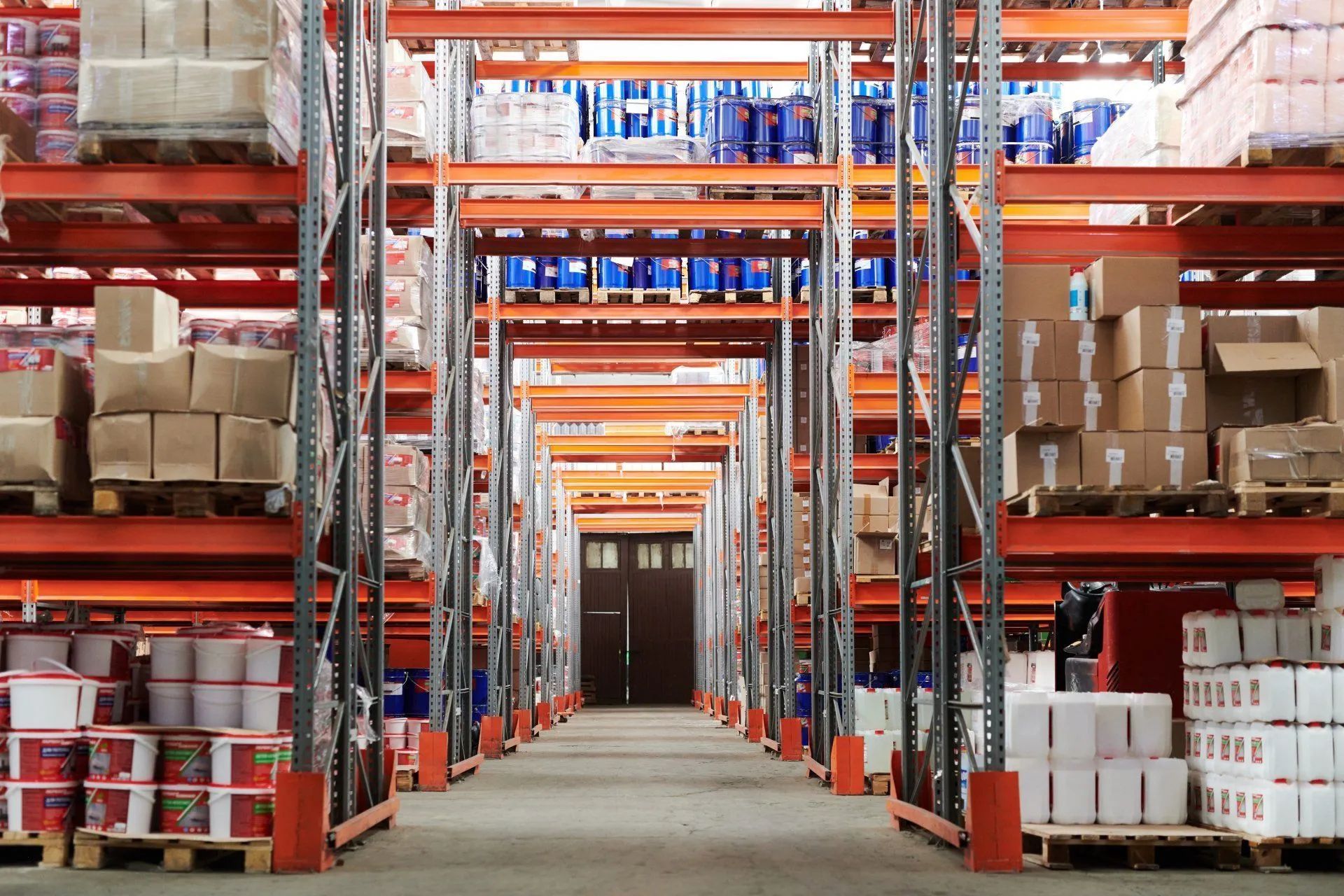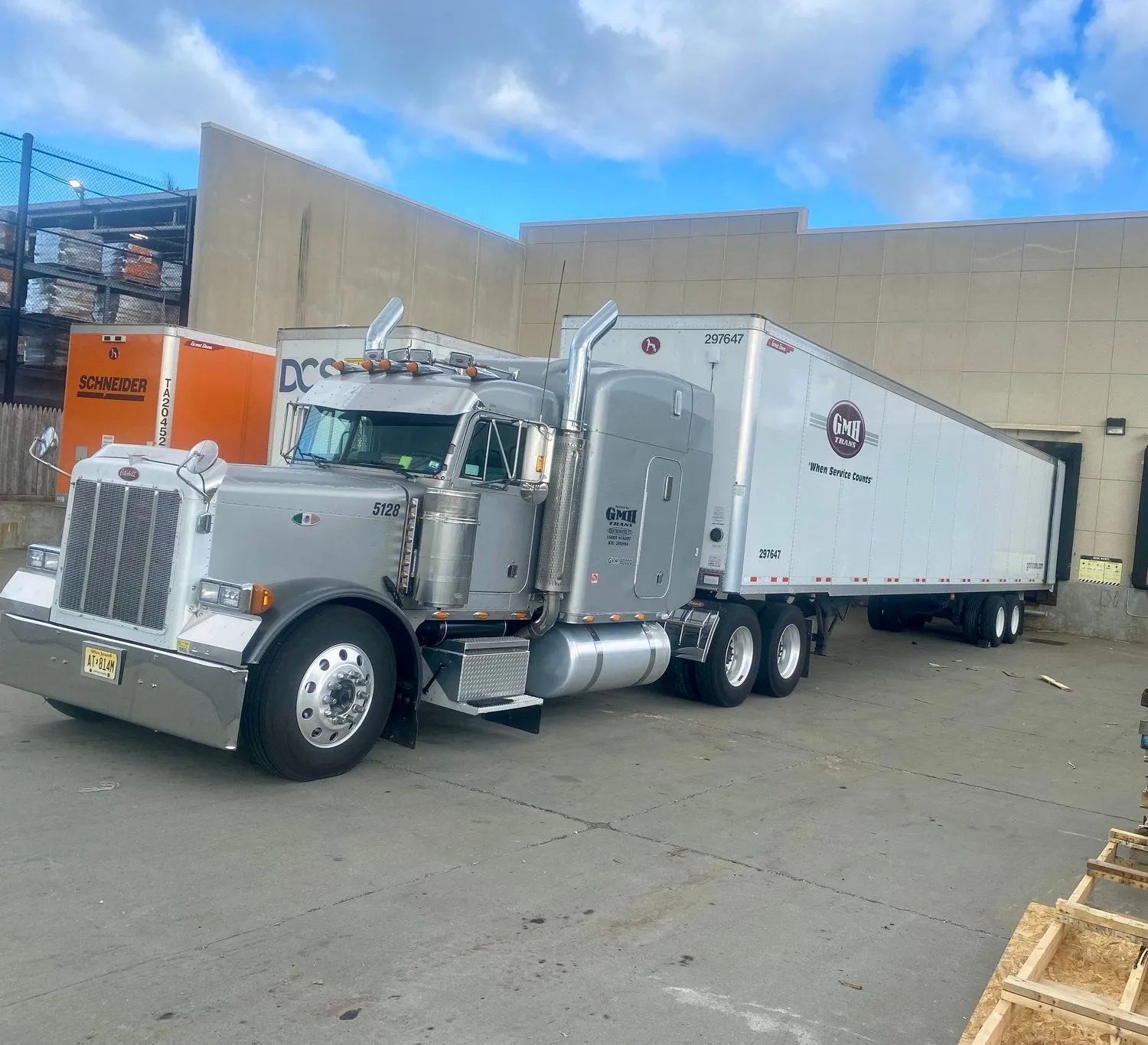
Too Big for LTL, Too Small for a Full Truck? What to Do With Awkward Loads
QUICK ANSWER: Freight that runs 6 to 12 pallets, occupies more than roughly 10 to 12 linear feet of trailer space, or exceeds about 750 cubic feet usually falls into a pricing gap between standard less-than-truckload service and a full truckload booking. Standard LTL rates are built around freight class, which the National Motor Freight Classification system sets using density, stowability, handling difficulty, and liability — so a shipment that is bulky, oddly shaped, or hard to stack next to other freight gets pushed into a high class and an inflated rate even when it weighs relatively little. Two purpose-built options exist for this gap: volume LTL, which fills unused backhaul space inside an LTL carrier's terminal network, and partial truckload, which uses a full-truckload trailer shared or partially loaded for point-to-point moves with far fewer touches. A broker who works both networks can place awkward freight in whichever one actually fits it, instead of forcing it through a standard LTL rating built for pallets that stack neatly.
You've got eight pallets sitting on the dock. Individually, none of them is unusual — some crated fixtures, an odd-length component, a couple of skids that don't stack because of their shape. Together, they're too much for a standard LTL pickup to handle without a fight over space, but nowhere close to justifying a dedicated 53-foot trailer all to yourself.
You call for a quote anyway, because that's the freight you have. The number that comes back is higher than you expected, and the explanation is some version of "reclassed based on density." You didn't change anything about the shipment. The freight just doesn't fit the boxes the pricing system was built around.
This happens constantly, and it's rarely explained well. The freight isn't broken and neither is your paperwork. It's sitting in a gap between two shipping modes that were never designed with it in mind, and most shippers never learn there's a third option built specifically for loads like this.
Why Awkward Freight Gets Punished by Standard LTL Pricing
LTL carriers price shipments using freight class, a number between 50 and 500 assigned under the National Motor Freight Classification system. Class is calculated primarily from density — the shipment's weight divided by the cubic feet it occupies — but three other factors get folded in: how easily the freight stows next to other shippers' pallets, how much special handling it needs, and how much liability risk it carries if it's damaged or lost. A dense, uniform pallet of hardware might land in one of the lowest classes and ride at one of the cheapest rates per hundredweight. A bulky, irregularly shaped piece of equipment at the same weight can land 100 or more class points higher, simply because it eats trailer space the carrier could otherwise sell to someone else.
Bulk gets penalized twice. Low-density freight already scores worse on the density factor, and if it's also awkward to stack or requires careful positioning, the stowability and handling factors push the class higher still. A shipment that would be unremarkable at a smaller size becomes disproportionately expensive to move once it crosses into "doesn't nest with other freight" territory. That's the exact profile of a lot of legitimately business-critical freight: partially assembled machinery, oversized fixtures, palletized components with awkward overhangs, anything that isn't a neat rectangular box.
Most LTL carriers also apply rules that override class-based pricing once a shipment gets big enough. A cubic capacity threshold, commonly set around 750 cubic feet, triggers density-based repricing regardless of the declared class. Separately, a linear-foot rule kicks in once freight occupies roughly 10 to 12 feet of trailer length, because that much floor space represents lost revenue the carrier could have sold to other shippers on a multi-stop route. Neither of these thresholds cares how much the shipment weighs. They care how much room it takes up, which is exactly the trait awkward freight has in abundance.
Where Dimensional Weight Comes Into Conflict With Reality
Dimensional weight is the practice of pricing freight based on the space it occupies rather than its actual scale weight, when the space it takes up is disproportionate to how much it weighs. For small-parcel and some LTL shipments, carriers calculate a dimensional weight by multiplying length, width, and height and dividing by a standard factor, then bill against whichever number — actual weight or dimensional weight — is higher.
This mechanic exists because trailer space is the carrier's real constraint, not the scale. A shipment of packing foam or an oversized but lightweight enclosure can weigh next to nothing and still occupy a meaningful share of a trailer. Left unpriced for that reality, a carrier would lose money hauling it. The problem for you as a shipper is that this same logic applies whether the freight is low-value bulk or an oddly proportioned shipment your business actually needs moved intact and on schedule. The pricing mechanism doesn't distinguish between the two. It just measures cubic space and charges accordingly.
This is also where measurement errors turn expensive. Freight class and dimensional pricing both depend on accurate length, width, and height figures that include the pallet itself, not just the product. A shipment measured without its pallet height, or measured before a last-minute repack changed its footprint, will show a lower declared density than the freight actually has. Carriers are entitled to inspect and reweigh a shipment that looks like it doesn't match its paperwork, and when that happens, the shipment gets reclassed and rebilled at the correct — and usually higher — figure, sometimes after it has already left your dock.
TIP: Before you book anything, measure the shipment at its largest point in every dimension, including the pallet, straps, and any packaging that adds to the footprint. A measurement taken from the product spec sheet instead of the actual crated shipment is one of the most common reasons freight gets reclassed mid-transit.Before you book anything, measure the shipment at its largest point in every dimension, including the pallet, straps, and any packaging that adds to the footprint. A measurement taken from the product spec sheet instead of the actual crated shipment is one of the most common reasons freight gets reclassed mid-transit.
The Two Modes Built for This Exact Gap
Once freight is too bulky for a clean LTL rating but too small to fill a trailer, two purpose-built options exist. They get used interchangeably in casual conversation, but they run on different networks and behave differently in practice.
Volume LTL uses the same hub-and-spoke terminal network as standard LTL, but it targets the carrier's own underused capacity — typically backhaul space on a truck already scheduled to run a route with room to spare. It's generally suited to shipments in the 6-to-12-pallet range, and because it draws on space the carrier already has available rather than pricing every cubic foot against the standard class chart, it can move at a materially better rate than the same freight would get quoted as high-class LTL. The tradeoff is that it moves on the carrier's schedule, not yours. Since it's still routed through terminals for consolidation and transfer like other LTL freight, delivery timing is less precise, and the freight gets handled at each terminal stop the same way any LTL shipment does.
Partial truckload takes a different route entirely. It uses the full-truckload carrier network rather than the LTL terminal system, loading your freight onto a dedicated trailer alongside one or two other shippers' loads, or in some cases loading it as the sole shipment on a trailer that isn't full. Because the freight isn't cycling through multiple terminals, it gets handled far less — often only at pickup and delivery — which matters enormously for anything fragile, awkwardly balanced, or expensive to damage. Partial truckload also tends to run point-to-point on a schedule closer to a dedicated truckload move, which makes delivery windows more predictable than volume LTL.
Bold difference, simple test. If your shipment can tolerate multiple handling touches and a flexible delivery window in exchange for a better rate, volume LTL is usually the fit. If it can't — because it's fragile, high-value, time-sensitive, or physically awkward enough that repeated handling raises real damage risk — partial truckload is almost always the better call, even though it draws on a different carrier pool.
What Gets Missed When Shippers Don't Know Both Options Exist
Most of the mishandling around awkward freight doesn't happen on the truck. It happens at the quoting stage, before the freight ever gets picked up.
A shipper who only has a relationship with standard LTL carriers has no path to volume LTL or partial truckload rates at all — the freight simply gets quoted and moved as high-class LTL, at whatever rate that class produces, because that's the only tool available. A shipper who defaults straight to full truckload because the load felt "too big" for LTL ends up paying for a trailer that's mostly empty, when a partial or volume booking would have accomplished the same move for less trailer space wasted.
The freight itself often gets misdescribed too. A shipment tendered as standard LTL without anyone flagging that it's a volume or partial candidate gets routed and priced exactly like any other LTL pallet, missing the entire point of the rate structures built for its size. This is less a carrier failure than a matching failure — the right shipping mode existed, but nobody on the shipping side identified the freight as a candidate for it before the booking went out.
There's also a coordination cost specific to partial truckload that catches shippers off guard. Because a partial truckload shipment often shares a trailer with another shipper's freight, pickup and delivery windows have to line up across multiple parties, and capacity isn't always available on your exact timeline the way it would be for a dedicated truck. Finding that capacity, and finding it reliably lane after lane, takes carrier relationships that most individual shipping departments don't maintain on their own.
Warning: Don't let a shipment default to whatever mode is easiest to book. A load quoted as standard LTL because nobody flagged it as oversized will get classed and billed as if it were an ordinary pallet, and by the time it's flagged for correction, it may already be in transit or already delivered with a reclassification charge attached.
How a Broker Working Both Networks Changes the Outcome
The core advantage of working with a broker on awkward freight isn't a single discount or a shortcut around classification rules. It's access to both carrier pools — LTL terminal networks and full-truckload carrier networks — combined with the judgment to know which one actually fits a given shipment before it's booked.
That starts with an honest measurement and classification check before the freight ever gets quoted, catching the pallet-height and packaging errors that lead to mid-transit reclassification. From there, a broker who regularly moves partial and volume freight can compare what the same shipment would cost and how it would be handled under each mode, rather than defaulting to whichever option is fastest to quote. For freight that's fragile or time-sensitive, that usually means steering it toward partial truckload's fewer touches. For freight that can tolerate a flexible window, volume LTL's access to backhaul capacity is often the better fit.
Carrier relationships matter more here than in ordinary LTL or full truckload booking, because both volume LTL and partial truckload depend on matching your freight to space that already exists somewhere in a carrier's network, on a schedule that isn't entirely yours to set. A broker with established relationships across both networks has more of that space to draw on, and more history with which carriers actually deliver on the timelines they quote for these harder-to-place shipments.
Frequently Asked Questions
How do I know if my shipment qualifies as volume LTL instead of standard LTL?
Shipments in the 6-to-12-pallet range, or those priced under a carrier's cubic capacity or linear-foot rule, are typical candidates. A standard quote reclassed to a high class despite reasonable weight is the clearest signal.
What's the real difference between volume LTL and partial truckload?
Volume LTL moves through the LTL terminal network on backhaul space, meaning more handling and looser timing. Partial truckload uses full-truckload trailers with far fewer touches, suiting fragile or high-value freight and offering tighter delivery windows.
Why did my freight get reclassed after I already booked it?
Reclassification happens when a carrier inspects the shipment and finds its dimensions, weight, or handling needs don't match the bill of lading. The usual culprit is a measurement that omitted pallet height or predated a packaging change.
Does dimensional weight apply to LTL freight the same way it applies to parcel shipments?
The logic matches, pricing against the greater of actual or space-based weight, but LTL applies it through freight class and cubic capacity rules rather than a single dimensional divisor. Both exist because carriers price trailer space.
Can awkward-shaped freight ever qualify for a lower freight class?
Yes, if packaging or palletization improves density and stowability. Freight that stacks cleanly, uses standard pallet dimensions, and needs no special handling equipment generally classifies lower than the same product shipped loose or irregularly configured.
Is partial truckload always more expensive than volume LTL?
Not necessarily, since it depends heavily on the lane and available capacity when booking. What partial truckload reliably offers is fewer handling touches and a more predictable schedule, often worth more than a marginal rate difference.
Getting Awkward Freight Into the Right Network First
The frustration with awkward freight rarely comes from the truck itself. It comes from a pricing system that never accounted for shipments too bulky to rate cleanly yet too light to fill a trailer. Once you understand that volume LTL and partial truckload exist for exactly this gap, the high-class quotes stop feeling like bad luck and start looking like what they really are: a matching problem, one that gets solved well before the freight ever leaves your dock.
Measuring honestly, classifying accurately, and knowing which of the two networks fits a given load turns a recurring headache into a routine booking decision. GMH Transportation Services, based in Westminster, Vermont, has spent 40
years placing freight that sits in this exact gap, drawing on both the LTL terminal system and the full-truckload carrier pool. That kind of depth is what keeps an oddly sized shipment from being priced like cargo it was never meant to resemble in the first place.